
How one teacher turned a breaking point into a better way to give writing feedback.
A few weeks ago, we shared Dr. Sarah Johnson’s argument from SXSW EDU: that AI in education keeps failing because educators aren’t at the table when tools get built. That the field keeps optimizing for speed to market instead of impact in the classroom.
This week, we want to show you what the alternative looks like.
His name is Gautam Thapar. And his story started the way a lot of the most important education stories do: with a teacher who believed something, tested it on himself, and nearly broke.
The thesis that nearly cost him everything
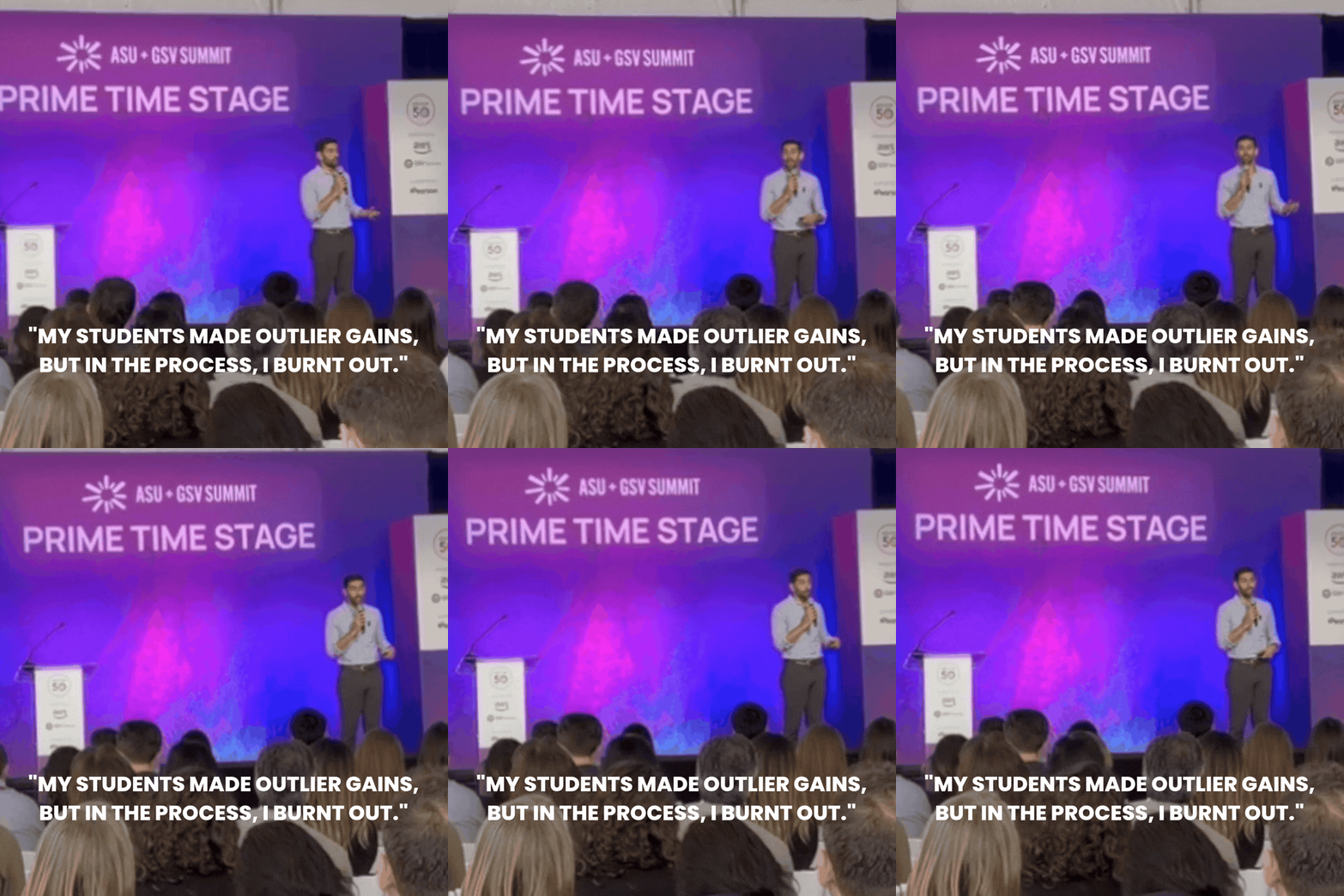
Gautam was a high school English teacher with a simple conviction: if students write more, they grow more. So he assigned writing constantly. And he graded every single piece himself. Morning, noon, and night.
It worked. His students’ work improved. And Gautam almost burned out completely from the strain.
Years later, as a principal, he found himself standing in front of a staff of teachers he cared about, holding a way of teaching he knew was right, with no way to ask them to do what it required. The approach didn’t scale. The hours didn’t exist. And the students in those classrooms were the ones absorbing the gap.
Almost 20 years have passed since Gautam first burned out at the gradebook. The problem hasn’t hasn’t gone away. Teachers across the country are still pouring hundreds of millions of hours into written feedback. And even when they do, it arrives too late: after the assignment is submitted, after the moment has passed, after the student has already decided what kind of writer they are.
The right question changes everything
When Gautam finally decided to build a solution, he didn’t start with technology. He started with a question that only a teacher would ask.
What if I had a trusted colleague who could help me grade? Someone who learned my standards, understood my voice, and got better the more we worked together?
Not a replacement. A partner.
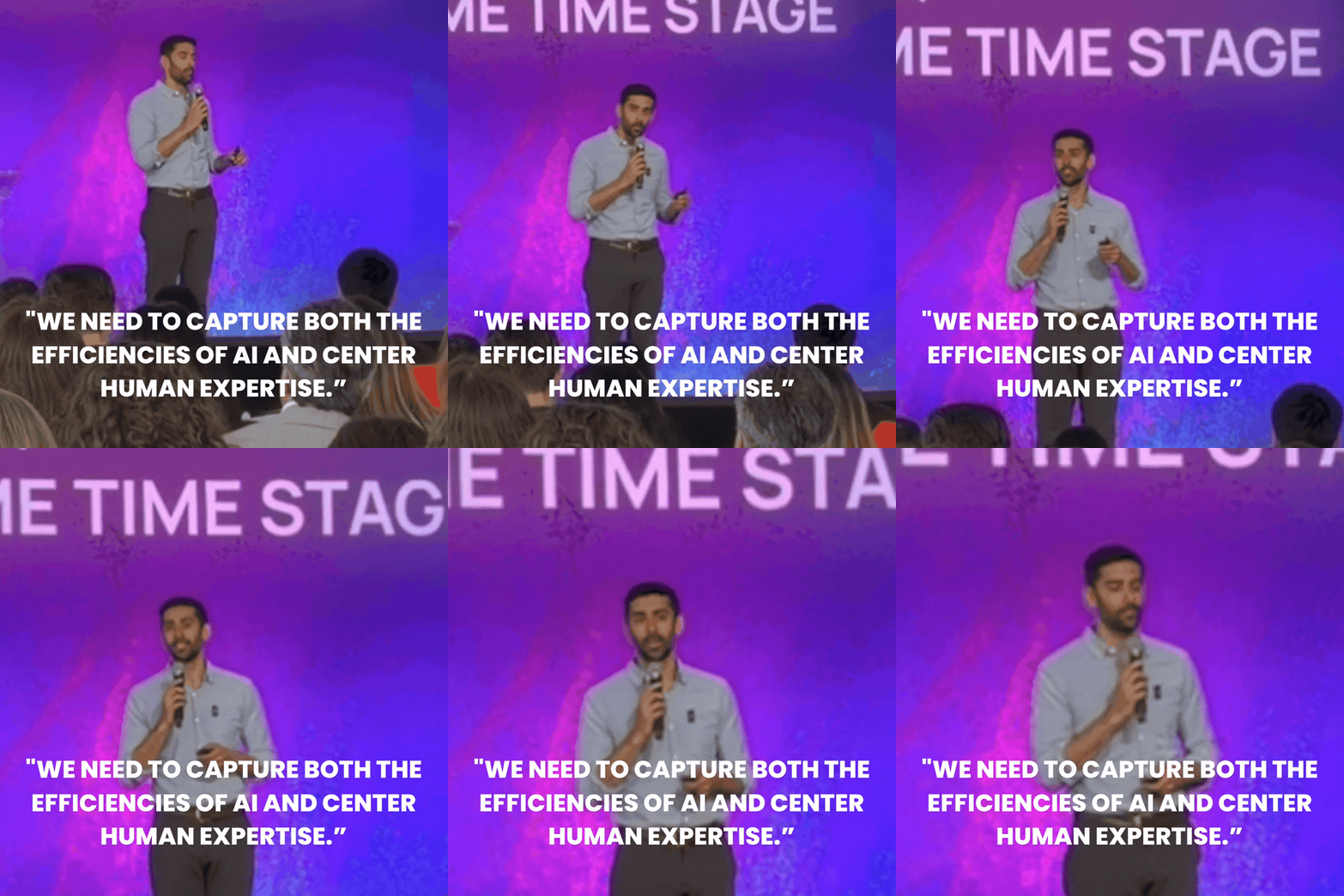
That’s the question at the heart of EnlightenAI, the AI-powered writing assessment and feedback tool Gautam built and one of the first products to come out of Teaching Lab’s Innovation Studio. It’s the kind of question that only gets asked when an educator is in the room building the product. That is exactly the condition the Studio was designed to create.
How it works
The teacher brings the assignment and the rubric. EnlightenAI drafts the feedback. As the teacher reviews and edits, the tool learns, calibrating to their voice, their standards, their expectations. With each interaction, it gets more accurate. Eventually, it can return a full set of scored, annotated drafts in seconds, ready for the teacher’s final review.
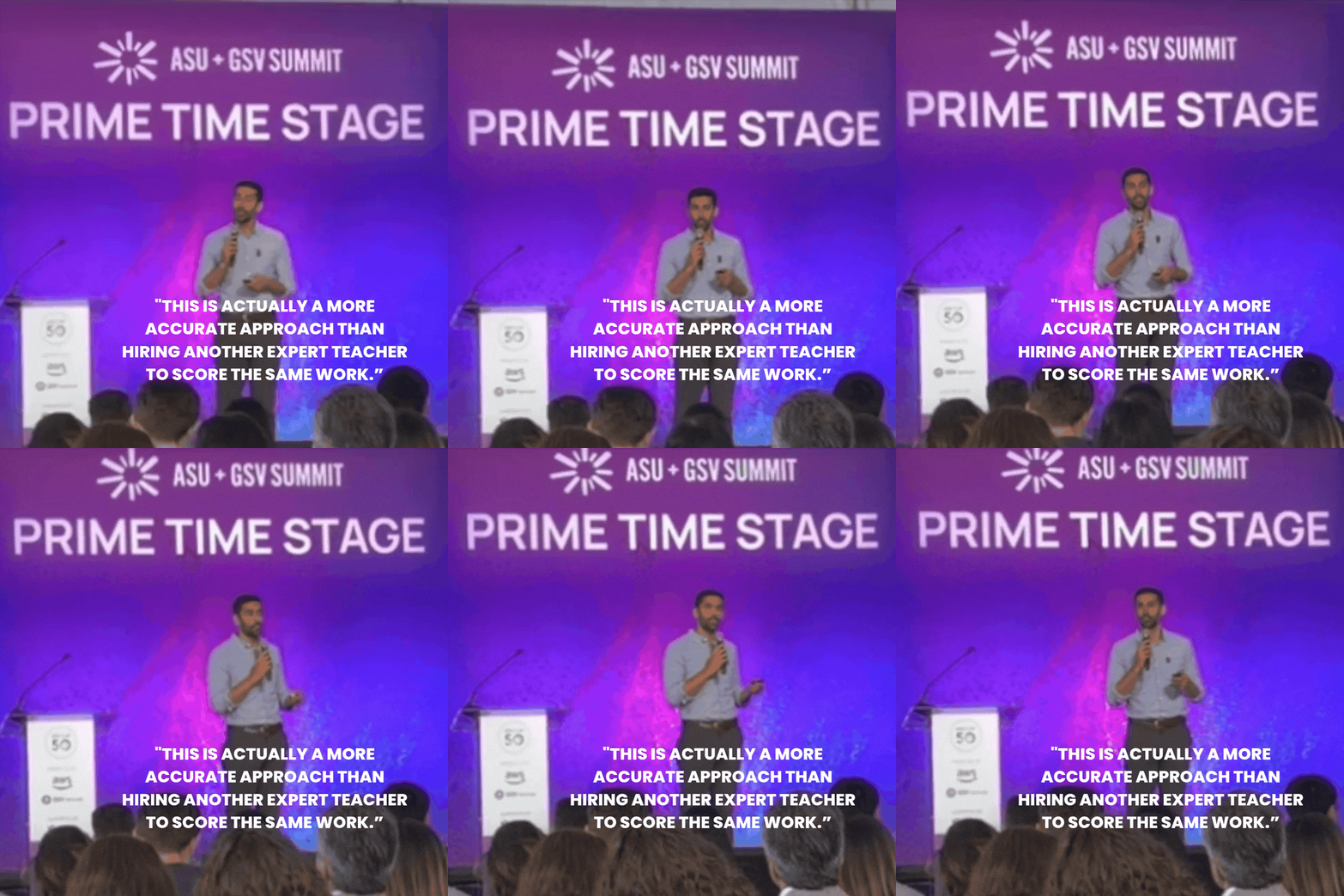
The result is feedback more aligned to what that teacher would have written than what a second expert scorer would produce using the same rubric. The teacher stays in control – and in relationship with their students. The tool does the time-consuming work.
But teachers kept pushing Gautam further. They didn’t just want help after class; they wanted support during it.
Now, when a student submits a draft mid-class, EnlightenAI analyzes it against the teacher’s guidance and returns line-by-line feedback in real time. The student revises, resubmits, improves, all before the bell rings. While that’s happening, teachers see a live dashboard surfacing class-wide patterns and gaps: exactly the formative data that used to require hours of analysis after the fact.
At the district level, leaders can configure assistants that operate across an entire network, bringing the same consistency and instructional coherence to writing feedback at scale.
What “built with educators” looks like at scale
EnlightenAI is now in more than a thousand schools. It supports over a million pieces of student writing every year. Across grade levels, subjects, high-stakes assessments – and lower-stakes formatives – teachers are doing what Gautam once tried to do alone, but without losing themselves in the process.
Tools that spread like this don’t get pushed. They get pulled. Educators find them, share them, and advocate for them because they were built by someone who understood the problem from the inside and never stopped listening.
This is the model Teaching Lab Studio was built around: every product starts with a problem educators have named. Educators are embedded in development from the beginning, designing alongside our team, testing in real classrooms, shaping how the tool changes based on what they experience. That process is slower than shipping to market. It is also why the tools that come out of it are different.
The first draft is not the final draft
There’s a line Gautam uses to describe what EnlightenAI makes possible for students: the first draft is not the final draft. Students get the feedback they need to actually revise, in time to actually do it.
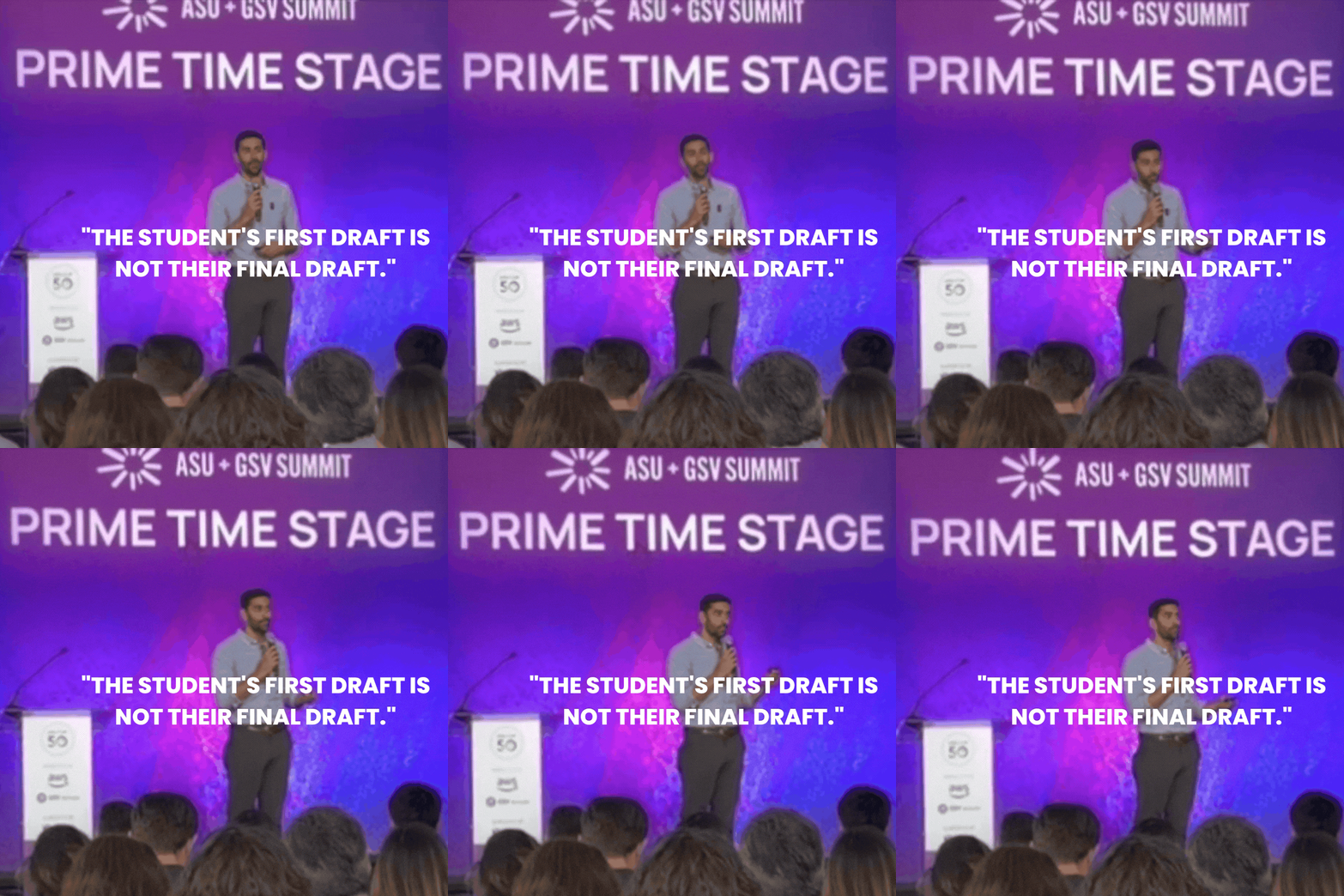
We think the same is true for the field. The first wave of AI in education is not the final draft. The tools that got built fast, without educators, without instructional infrastructure, without a real theory of change: those are the first draft. We can revise.
But revision isn’t just possible – it’s where the real work begins. It’s the moment where speed gives way to intention, where proximity to classrooms reshapes what gets built, and where the people who understand the work best create what comes next.
Try Enlighten
Teachers can sign up for free at enlightenme.ai during the open access period. Or contact the EnlightenAI team today to schedule a demo and explore partnership plans.
Last, check out what the team was up to during ASU+GSV Summit 2026 during the Educator Happy Hour where teachers, coaches, and other school leaders sat alongside the people building tools at Teaching Lab Studio.